
The short answer
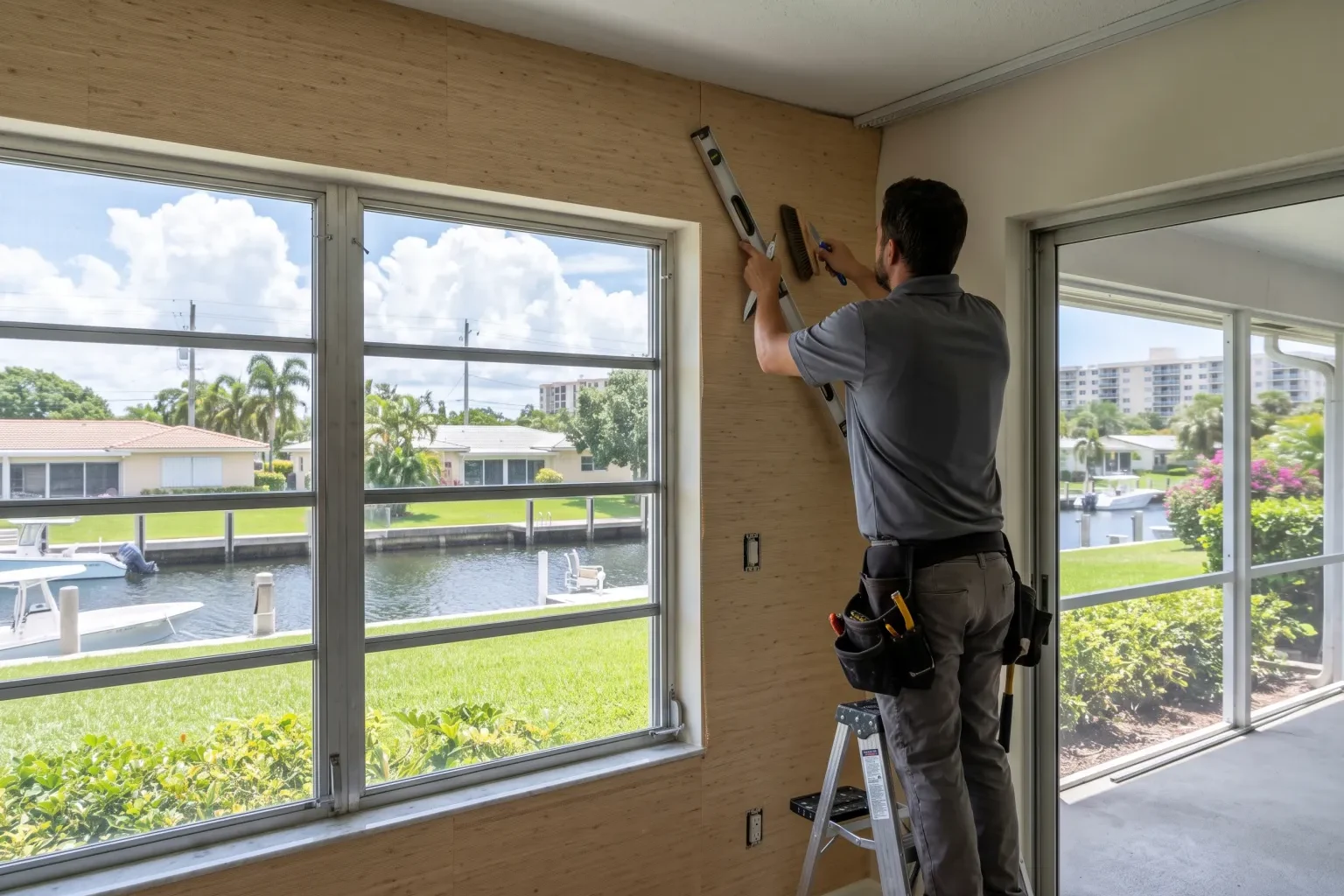
Grasscloth suits dry, low-traffic rooms like living rooms, bedrooms, dining rooms and offices where you want natural texture. We repair, smooth and prime the walls, often add a liner, then hang panels carefully to manage color variation and seams. Cost depends on wall condition, paper type, pattern repeat, room size and ceiling height.
Grasscloth brings real texture to a room. It is woven from natural fibers like sisal, jute, hemp or seagrass and backed with paper, so no two rolls look exactly alike. That character is the reason people choose it, and it is also why it needs a more careful hand than standard vinyl wallpaper. Visible seams, color shifts between panels and sensitivity to moisture all come with the material. We install grasscloth for homeowners in Pompano Beach and nearby cities, and this page explains when it makes sense, how we prepare your walls, how the installation works and how to keep the finished walls looking good.
When Grasscloth Is the Right Choice
Grasscloth works best where you want warmth and depth without a busy pattern. It softens a large wall, adds interest behind a bed or sofa, and gives an office or dining room a finished, tailored feel. Because the fibers absorb some sound, it can also make a room with hard floors feel a little quieter.
It is not the right material for every space. Natural fibers absorb water and can stain, fray or discolor when splashed or rubbed. South Florida adds another factor: from May through October the weather is hot, humid and wet, and rooms that take on moisture can cause grasscloth to loosen or develop marks. We usually steer homeowners toward a vinyl or faux grasscloth for spaces like these.
- Good fits: living rooms, bedrooms, dining rooms, home offices, accent walls and ceilings in dry rooms
- Use caution: hallways where hands and bags brush the walls, and homes with young children or pets that scratch
- Better alternatives: full bathrooms, kitchen backsplash areas, laundry rooms and rooms near pool doors
How We Prepare and Prime the Walls
Grasscloth is thin and textured, but it will still telegraph dents, ridges and patches underneath it. Preparation is where most of the quality of the finished job comes from.
We start by removing outlet covers, switch plates and any old wallpaper. Holes, cracks and dings get filled and sanded. Textured walls, common in many Florida homes, often need to be skim-coated smooth so the panels lie flat. Any signs of moisture behind the wall, such as soft drywall or staining, should be addressed before we hang anything.
Next we apply a wallpaper primer made for this purpose. It seals the surface, helps the paste grip evenly and makes future removal easier. Because grasscloth seams can show slivers of the wall behind them, we often tint the primer close to the paper color. On walls that are uneven or previously damaged, we may recommend hanging a liner paper first to create a uniform base.
Our Installation Process, Step by Step
Grasscloth rewards patience. Here is how we approach a typical room.
- Measuring: We measure each wall, account for windows, doors and ceiling height, and confirm you have enough rolls from the same production run. Rolls from different runs can vary noticeably in color.
- Inspecting and sequencing: We unroll and inspect panels before cutting, looking for flaws and shade differences. Then we plan the order so color shifts look gradual and intentional instead of abrupt.
- Pattern matching: Most natural grasscloth has no pattern to match, but many manufacturers recommend reversing every other panel to soften shading at the seams. Printed or striped grasscloth has a repeat, and we align it carefully across each seam.
- Pasting: We apply a clear paste to the back of each panel, keeping it off the face. Paste on the fibers can leave permanent marks, so we work clean and avoid wiping the front with water.
- Hanging and seams: Panels are hung plumb and butted tightly. Grasscloth seams are visible by nature; our goal is straight, tight, even seams rather than invisible ones. We place seams thoughtfully around focal points where possible.
- Trimming: We trim at the ceiling, baseboards, windows and outlets with fresh blades so the fibers cut cleanly instead of fraying.
- Final check: We reinstall covers, check every seam and edge, and walk the room with you.
What Affects the Cost
Every grasscloth project is quoted individually because a few factors make a big difference in labor and time.
- Wall condition: Removing old paper, repairing damage or skim-coating textured walls adds prep time.
- Paper type: Delicate or loosely woven fibers, unbacked materials and hand-made papers take longer to handle and trim.
- Pattern repeat: Printed grasscloth with a repeat requires more careful alignment and can increase the amount of material needed.
- Room size and layout: More wall area, plus windows, built-ins and corners, means more cutting and fitting.
- Ceiling height: Tall walls, stairwells and ceiling installations require scaffolding or extra equipment and more care with long panels.
Caring for Your Grasscloth Walls
With sensible care, grasscloth holds up well in the rooms it suits. Dust it gently with a soft brush or a vacuum fitted with a brush attachment. Do not scrub, and avoid water or household cleaners, which can leave rings and stains on natural fibers. If something spills, blot it right away with a dry, clean cloth.
Indoor humidity matters in our climate. Keeping your air conditioning running steadily during the humid months helps the paper stay flat and the seams stay tight. Hurricane season runs from June 1 to November 30, and if a storm knocks out power for a while, airing out and drying the room as soon as possible helps protect the walls. Direct sun can also fade natural fibers over time, so window treatments are worth considering on bright exposures. If a seam lifts or an edge gets damaged, contact us early; small repairs are much easier before they grow.
Grasscloth Wallpaper Installation by city
- Grasscloth Wallpaper Installation in Lighthouse Point
- Grasscloth Wallpaper Installation in Hillsboro Beach
- Grasscloth Wallpaper Installation in Deerfield Beach
- Grasscloth Wallpaper Installation in Coconut Creek
- Grasscloth Wallpaper Installation in Lauderdale-by-the-Sea
- Grasscloth Wallpaper Installation in Margate
- Grasscloth Wallpaper Installation in Oakland Park
- Grasscloth Wallpaper Installation in Boca Raton
- Grasscloth Wallpaper Installation in Wilton Manors
- Grasscloth Wallpaper Installation in North Lauderdale
- Grasscloth Wallpaper Installation in Lauderdale Lakes
- Grasscloth Wallpaper Installation in Fort Lauderdale