
The short answer
Ceiling wallpaper works best on smooth, dry ceilings in rooms where you want to add pattern or warmth without crowding the walls. A good result depends on careful surface prep, a wallcovering primer, and precise layout so the pattern lines up and the seams stay tight overhead.
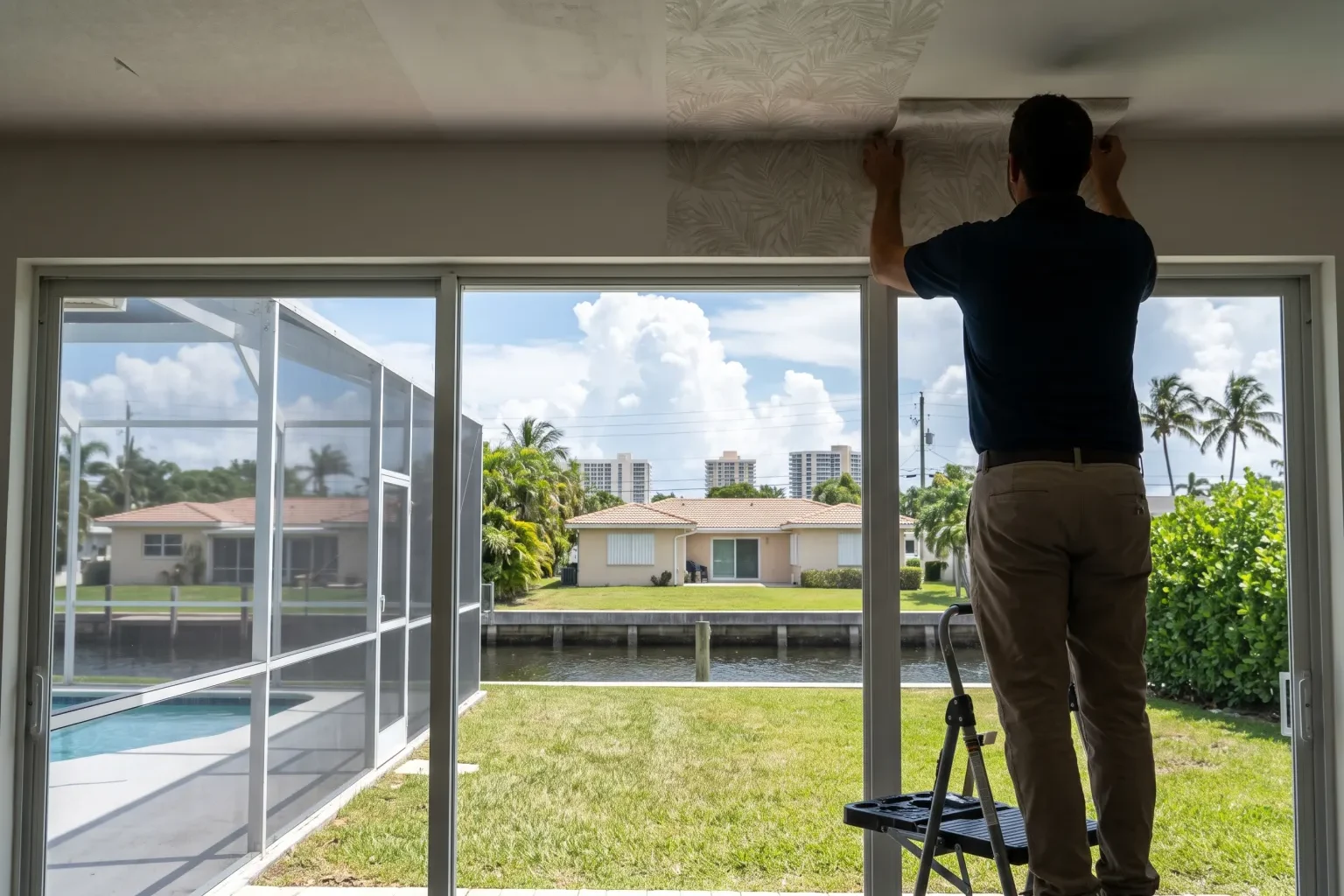
A ceiling is the largest open surface in most rooms, and it's often the one homeowners overlook. Ceiling wallpaper makes it part of the design: a soft grasscloth over a dining table, a small botanical print in a powder room, or a quiet texture that disguises minor flaws in an older home. It is also harder to hang than paper on walls. Every strip goes up overhead, gravity works against the paste, and seams can be seen from below under every light. We install ceiling wallpaper for homeowners in Pompano Beach, Fort Lauderdale, Deerfield Beach, Lighthouse Point, Coconut Creek and surrounding communities. This page covers when a papered ceiling makes sense, how we prepare the surface, how the installation works, what drives the cost, and how to keep the finished ceiling looking good.
When Ceiling Wallpaper Is the Right Choice
Ceiling wallpaper is a good fit when the walls are busy with windows, built-ins, art or tile, and the ceiling is the only clean surface left for color or pattern. It also suits small rooms like powder rooms, laundry rooms and walk-in closets, where a ceiling print feels intentional rather than overwhelming. In bedrooms and dining rooms, a textured paper or a soft pattern can make a flat white ceiling feel finished.
It is not always the right call. Bathrooms with showers and no exhaust fan, ceilings with an active or recent leak, and rooms with heavy popcorn texture need extra work, and sometimes a different approach, before any paper goes up. We'll tell you honestly if paint is the better option for a particular ceiling.
- Good candidates: dining rooms, bedrooms, powder rooms, closets, nurseries, home offices and coffered or tray ceiling panels
- Use caution: full bathrooms with poor ventilation, covered lanais and porches, and ceilings with water staining
- Patterns that work well overhead: small repeats, all-over prints, grasscloth and other natural textures, and subtle geometrics
How We Prepare and Prime the Ceiling
Prep takes up most of a ceiling job, because light from windows and fixtures shows every bump through the paper. We start by inspecting for cracks, nail pops, loose tape joints and water stains. After a storm, and especially during the June through November hurricane season, a stain can point to a roof leak that should be fixed first. Papering over a damp ceiling traps moisture and leads to bubbling, staining and mildew.
Textured ceilings have to be smoothed. Popcorn texture is removed or skim-coated, and older popcorn should be tested before it's disturbed, since some contains asbestos. We patch and sand repairs until the surface is flat, then apply a primer made for wallcovering. Primer helps the paste grip, keeps the drywall from soaking up adhesive, and makes the paper far easier to remove later without damaging the surface underneath.
South Florida's climate affects timing. From May through October the air stays hot and humid, so joint compound, primer and paste dry more slowly. We ask homeowners to keep the air conditioning running during and after the job, and we allow full drying time between steps instead of rushing.
The Installation Process, Step by Step
Hanging paper overhead calls for planning before the first strip is cut. We set up stable scaffolding or work platforms so we can smooth each strip evenly, without stretching it or reaching from an unsteady ladder.
- Measuring: We measure the ceiling, find the true center and the room's longest sightline, and calculate how many strips and rolls the pattern repeat requires.
- Layout: Strips usually run parallel to the main window or across the shorter span, so the strips are shorter and easier to manage. We snap a straight reference line instead of trusting walls that may not be square.
- Pattern matching: We center the pattern on the room or on a key feature, such as a light fixture or chandelier, so the design looks balanced from the doorway.
- Pasting and booking: Each strip is pasted, or activated if it's prepasted, then folded and rested for the time the manufacturer specifies so it relaxes before it goes up.
- Hanging and seams: Strips go up one at a time with tight butted seams. We roll the seams gently and wipe off excess paste right away.
- Trimming: We trim carefully at the wall line, crown molding, vents and light boxes, with power to fixtures shut off, and replace cover plates once the paper is set.
What Affects the Cost
Every ceiling is different, so we price after seeing the space or reviewing clear photos and measurements. These are the main factors:
- Ceiling condition: Cracks, stains, popcorn texture or uneven drywall add prep time, and sometimes added steps like skim coating.
- Paper type: Grasscloth, unpasted papers and delicate materials take more care to hang than prepasted or peel-and-stick options.
- Pattern repeat: Large repeats and drop matches produce more waste and take longer to align overhead.
- Room size and shape: Tray ceilings, angles, beams and many light fixtures mean more cuts and trimming.
- Ceiling height: Vaulted and tall ceilings need taller scaffolding and more setup time.
- Furniture and access: Rooms that need to be cleared or protected take extra time.
Caring for Your Papered Ceiling
Ceilings get less wear than walls, so a well-hung paper can stay in good shape for years. Dust it now and then with a soft, dry microfiber duster on an extension pole. On washable vinyl papers, you can blot small marks with a damp cloth. Grasscloth and other natural papers should not get wet, so dust them only.
Keep humidity under control. Run bathroom exhaust fans during showers and for a while afterward, and keep the air conditioning on during the humid summer months. If a seam lifts or you notice a stain, deal with it early. A small lifted edge is easy to re-adhere, and a stain may point to a leak above that needs attention before it spreads.