
The short answer
Peel and stick wallpaper works best on smooth, primed walls in climate-controlled rooms that don't see heavy moisture. We prepare and prime the walls, lay out a level starting line, match the pattern, and trim every edge cleanly so the paper stays flat. Cost depends on wall condition, paper type, pattern repeat, room size and ceiling height.
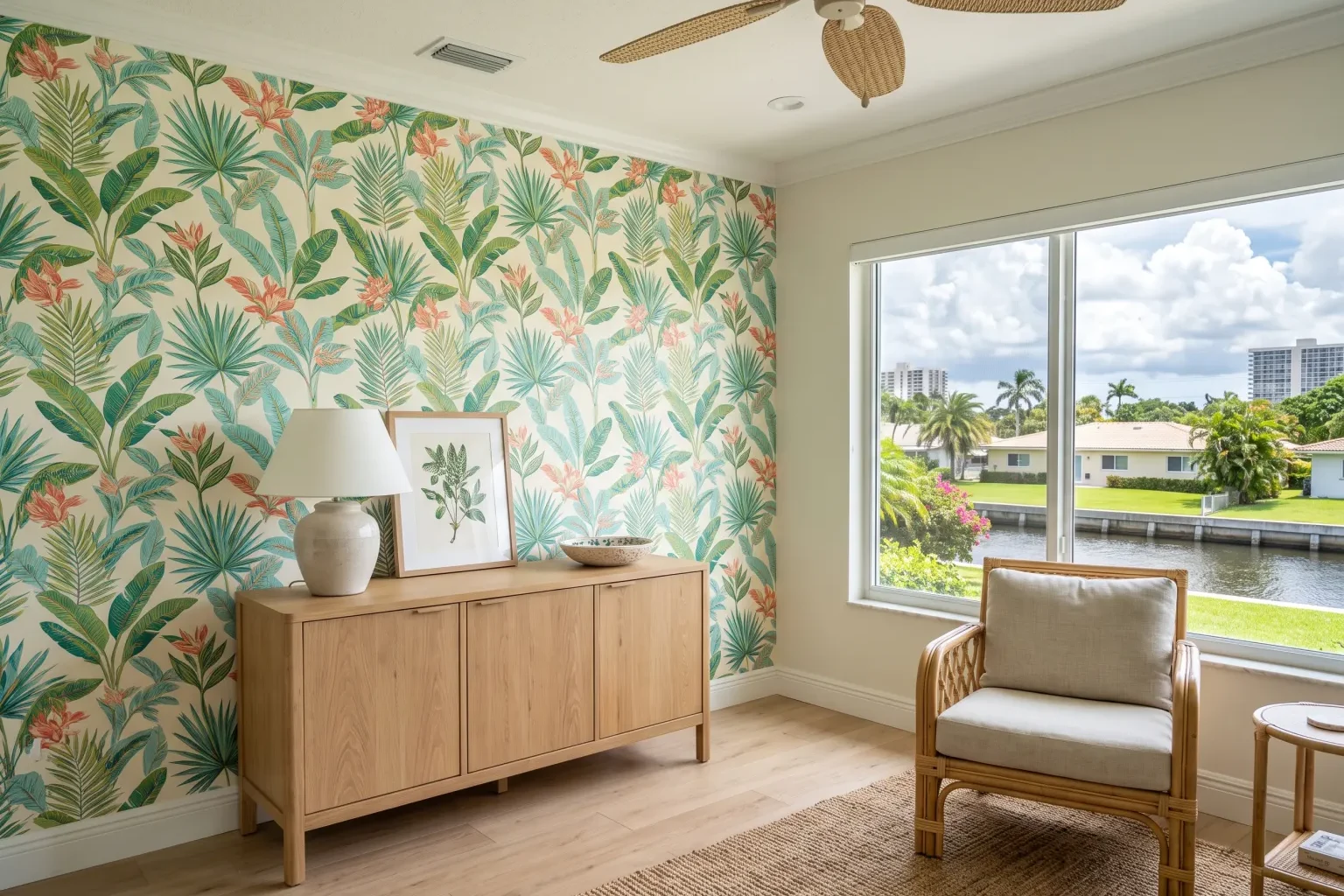
Peel and stick wallpaper gives a room pattern and color without paste, water trays or soaking. It suits renters, people who like to change their décor often, and homeowners who want to try a bold look in a small space first. But "easy to apply" doesn't mean easy to apply well. Bubbles, drifting seams and lifted edges show up quickly, especially in South Florida's humidity. Custom Wallpaper Installer handles peel and stick installation for homeowners in Pompano Beach and nearby cities, from wall prep through the final trim.
When Peel and Stick Is the Right Choice
Peel and stick works best on smooth, sound walls in rooms that stay fairly dry and air-conditioned. Good candidates include accent walls in bedrooms and living rooms, home offices, closets, nurseries, the backs of bookshelves, and powder rooms without a shower.
It's also a strong fit if you expect to change the look in a few years. Most removable papers come off without the scraping that traditional paste requires, though results depend on the product and the paint underneath.
It's less suited to full bathrooms with daily showers, walls that get strong afternoon sun through large windows, heavily textured surfaces like knockdown or popcorn finishes, and walls that tend to stay damp. Summers here run hot, humid and wet from May through October, and adhesive can loosen where moisture builds up. If a room falls into one of these categories, we'll talk through whether a traditional pasted wallpaper would hold up better.
How We Prepare and Prime the Walls
Adhesive-backed paper grabs onto whatever is on the surface, so preparation matters more than with almost any other wall covering. A nail pop, a ridge of old caulk or a film of dust will either show through or weaken the bond.
Fresh paint is a common problem. Paint that hasn't cured can hold moisture, and the paper may bubble or pull paint off when it's removed later. If your walls were recently painted, we'll schedule installation after the paint has had time to cure. We also make sure the air conditioning is running so the walls and paper settle at a steady temperature and humidity.
- Inspect walls for moisture, peeling paint, cracks and texture
- Remove outlet covers, switch plates and wall-mounted fixtures
- Fill holes and dents, then sand patches flush
- Clean the surface to remove dust, grease and residue
- Apply a primer suited to removable wallpaper so it bonds well now and releases cleanly later
- Let paint and primer cure fully before any paper goes up
Our Installation Process, Step by Step
Careful measuring and layout prevent most of the problems people run into with DIY installs. Here's how we work through a room.
Before we leave, we walk the room with you, check for bubbles or lifting edges, and address anything we find.
- Measuring: We measure each wall's height and width, note windows, doors and outlets, and calculate the number of panels needed, including extra for pattern matching and trimming.
- Layout: Walls and corners are rarely perfectly straight, so we mark a level vertical line to start from instead of relying on a corner.
- Pattern matching: We check the pattern repeat and dry-fit panels so motifs line up across seams and land evenly at the ceiling line.
- Applying panels: We peel the backing a section at a time and smooth the paper from the center outward with a felt-edged tool, working out air as we go.
- Seams: Depending on the product, we butt panels edge to edge or use the slight overlap the manufacturer specifies, then press seams firmly so the edges stay down.
- Trimming: We trim at the ceiling, baseboards, windows and door casings with a sharp blade and straightedge, changing blades often for clean cuts. We cut openings for outlets and switches and reinstall the cover plates.
What Affects the Cost
Every project is quoted after we see the space. These are the main factors that shape the price.
We'll explain what's driving your estimate so you can decide, for example, whether a single accent wall or a different pattern fits your plans better.
- Wall condition: Walls that need patching, sanding, texture smoothing or extra priming take more time before any paper goes up.
- Paper type: Thin vinyl films, thicker textured products and fabric-style peel and stick each handle differently. Heavier or more delicate papers take longer to position and trim.
- Pattern repeat: Large repeats and drop matches need more careful layout and usually produce more waste than solids or small, random patterns.
- Room size and ceiling height: More wall area means more panels. Tall ceilings, stairwells and vaulted walls require ladders or scaffolding and extra care to keep panels straight.
- Obstacles: Windows, built-ins, outlets and angled walls add cuts and time.
Caring for Your Finished Walls
Peel and stick wallpaper doesn't need much maintenance, but a few habits help it stay flat and clean.
The Atlantic hurricane season runs from June 1 to November 30. If a storm knocks out power and the house goes without air conditioning for several days, check edges and seams once cooling is back on. Any water intrusion should be dried out and repaired before paper is reapplied or replaced.
- Dust with a soft, dry cloth or microfiber duster.
- Spot-clean with a damp cloth and mild soap only if the manufacturer lists the paper as washable. Avoid scrubbing pads and harsh cleaners.
- Keep the air conditioning running steadily, especially during the hot, humid months, to limit moisture at the wall.
- Use bathroom exhaust fans and kitchen range hoods to clear steam.
- If an edge lifts, press it back down firmly. If it won't stay, give us a call.